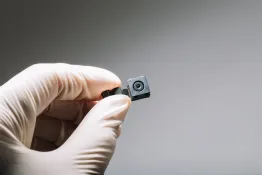
Vehicle Eavesdropping and the Security Expert's Worst Nightmare
A vehicle is one of the most common places where attackers install listening devices. How can you protect yourself?
Did you know that up to 70% of our clients had a listening device concealed in their vehicle? Whether it was an inconspicuous device tucked into a hidden corner or a sophisticated system integrated directly into the infotainment unit, a car is one of the most common locations in which attackers install surveillance equipment.
Why? Because detecting a listening device in a vehicle is extraordinarily difficult. The sheer volume of electronics, the complexity of the construction, and the sophistication of modern eavesdropping devices make this a task that can take several days.
Why Is a Vehicle the Ideal Target for Eavesdropping?
1️⃣ The Vehicle Is Mobile:
This means an attacker can easily gather information about your meetings, routes, and habits.
2️⃣ Easy to Install:
If you regularly leave your vehicle at a garage, car wash, or in the hands of unvetted individuals, an attacker has ample time to install sophisticated surveillance equipment.
3️⃣ The Infotainment System as a Gateway:
Modern vehicles are equipped with complex electronics that make an ideal medium for espionage. Through the infotainment system, an attacker can gain access to:
- Calls made via Bluetooth.
- Recordings from dashcams.
- Navigation data showing where you have been and where you are going.
4️⃣ Sophisticated Concealed Listening Devices
Attackers frequently install devices in:
- Wheel arches, bumpers, and wheel wells.
- The front undercarriage.
- Spaces hidden within the dashboard or roof lining.
Why Is Detecting a Listening Device in a Vehicle So Difficult?
Detecting surveillance equipment in a vehicle is almost always complicated, because:
- Volume of electronics: Modern vehicles are literally packed with wiring, signals, and sensors that create "noise" which interferes with the scanning equipment used to search for bugs.
- Concealed installation: Professional listening devices are designed to blend in with the vehicle's electronics and appear to be an integral part of the car.
- Complexity of vehicle construction: In some cases the vehicle must be completely dismantled in order to locate the device.
❌ Detecting a Bug for 4,900 CZK? Completely Unrealistic.
Some providers claim they can detect listening devices for a fraction of the cost. If the bug was installed by a professional, you have no chance of success with such a service. A professional listening device may be equipped with:
- A masking system: Prevents detection by conventional means.
- GPS and GSM technology: The attacker can remotely deactivate the device if a detection attempt is detected.
Remember: If the bug is embedded in the vehicle's systems, cheap protection is a waste of both time and money.
Laser Eavesdropping Aimed at a Warehouse or Vehicle — How to Defend Against It
Laser eavesdropping is another technique that is growing increasingly popular. The attacker directs a laser at a warehouse or vehicle window, captures the vibrations of the glass in the reflected beam, and converts them back into sound.
✅ Solution:
- Use of specialist noise-generating devices that interfere with window vibrations.
- Installation of "silencers" on windows that introduce noise directly into the glass.
Today we can design these systems so that they are virtually invisible. Your protection therefore remains discreet but maximally effective.
How to Protect Yourself Against Eavesdropping in Your Vehicle
- Have your vehicle regularly inspected
Have your vehicle checked regularly by specialists who can detect concealed devices and secure your car against attackers.
- Be careful about who you entrust your vehicle to
Consider carefully who has access to your car, especially during interior valeting or servicing. A few hours is all it takes for an attacker to install a device that is extremely difficult to detect.
- Work with professionals
Our team has experience securing military convoys, diplomatic vehicles, and private cars. Among the services we offer is the detection and removal of listening devices.
How Does a Professional Vehicle Bug Sweep Work?
1. Signal Analysis:
We use advanced technologies to scan signals, thermal spectra, and carry out a complete procedure targeting concealed transmissions that may indicate the presence of a surveillance device.
2. Physical Inspection:
Every detail of the vehicle is examined, including:
- The undercarriage.
- Wheel wells.
- Electronics in the dashboard and infotainment system.
3. Expert Disassembly:
Where a concealed device is suspected, certain parts of the vehicle must be dismantled in order to physically locate it.
4. Residual Activity Testing:
After the listening device has been removed, we test whether it has left any further hidden traces (e.g. programmed chips within the infotainment system).
What Should You Do If You Suspect a Bug in Your Vehicle?
Proceed as follows:
- Leave the vehicle parked in a quiet location. Do not connect to a known Wi-Fi network and do not use Bluetooth.